

Psychological States of Crowds.

Dernière mise à jour : 6 févr.

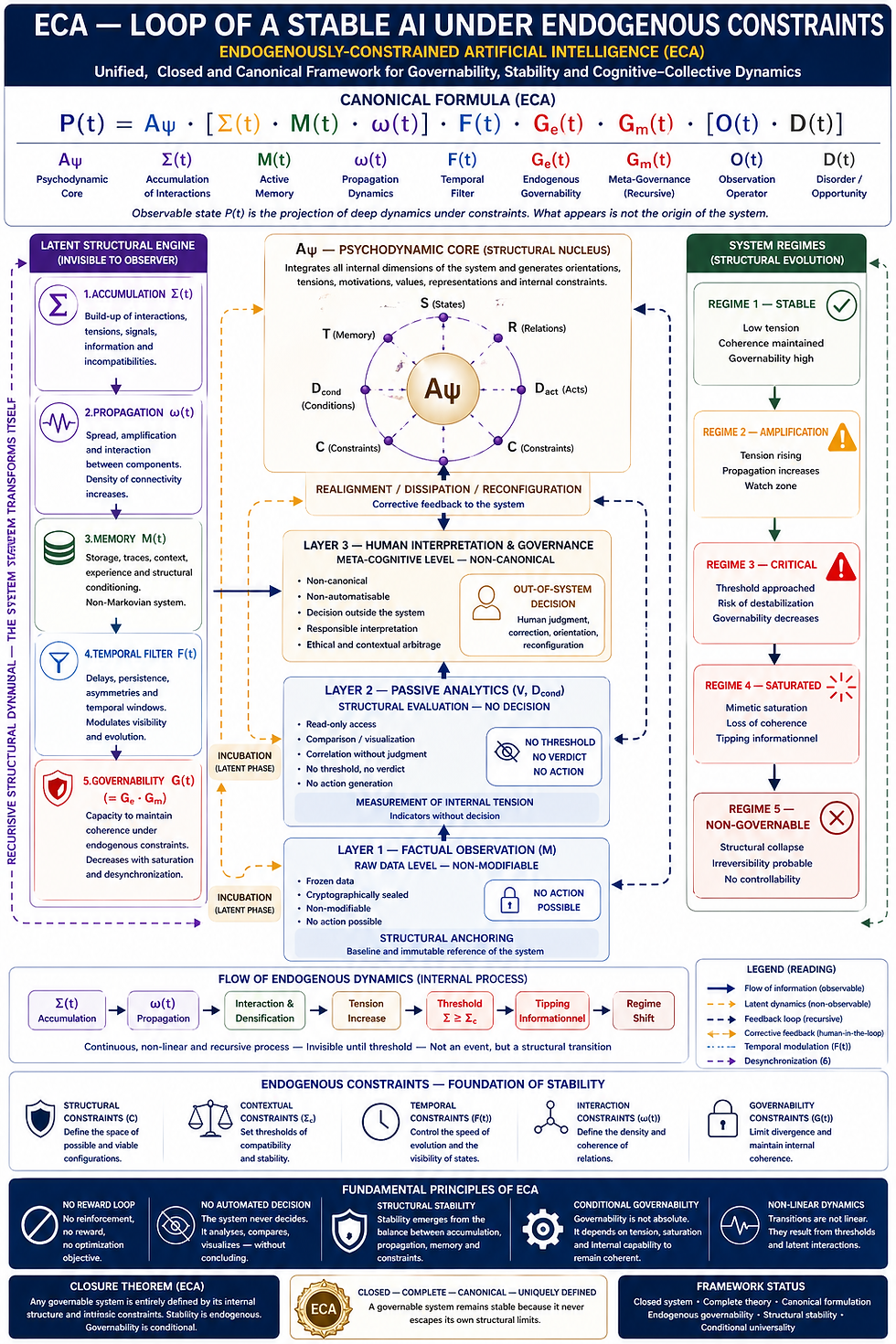
This methodology models the collective behavior of crowds through the CDF universality formula, considering the crowd as a self-regulated, leaderless entity influenced by attraction, repulsion, memory, and emotional energy.
The phases include:
- attraction and repulsion (psychological stabilizers based on thresholds and memory),
- emotional amplification (euphoria, panic, saturation through volume and feedback loops),
- and dynamic imbalances (inertia or amplified temporal instabilities).
These are followed by opportunities and convergences (windows pulling toward refuges and reinforcing robustness), as well as global modulation (context-sensitive adjustment for universal regulation).
These states make it possible to predict collective tipping points, such as shifts from euphoria to panic, with applications to markets, social dynamics, or physical phenomena.
The framework and its impacts highlight self-regulation, measurable evolutions, and the universality of the model.... Author ORCID: https://orcid.org/0009-0004-7889-6641


Commentaires